
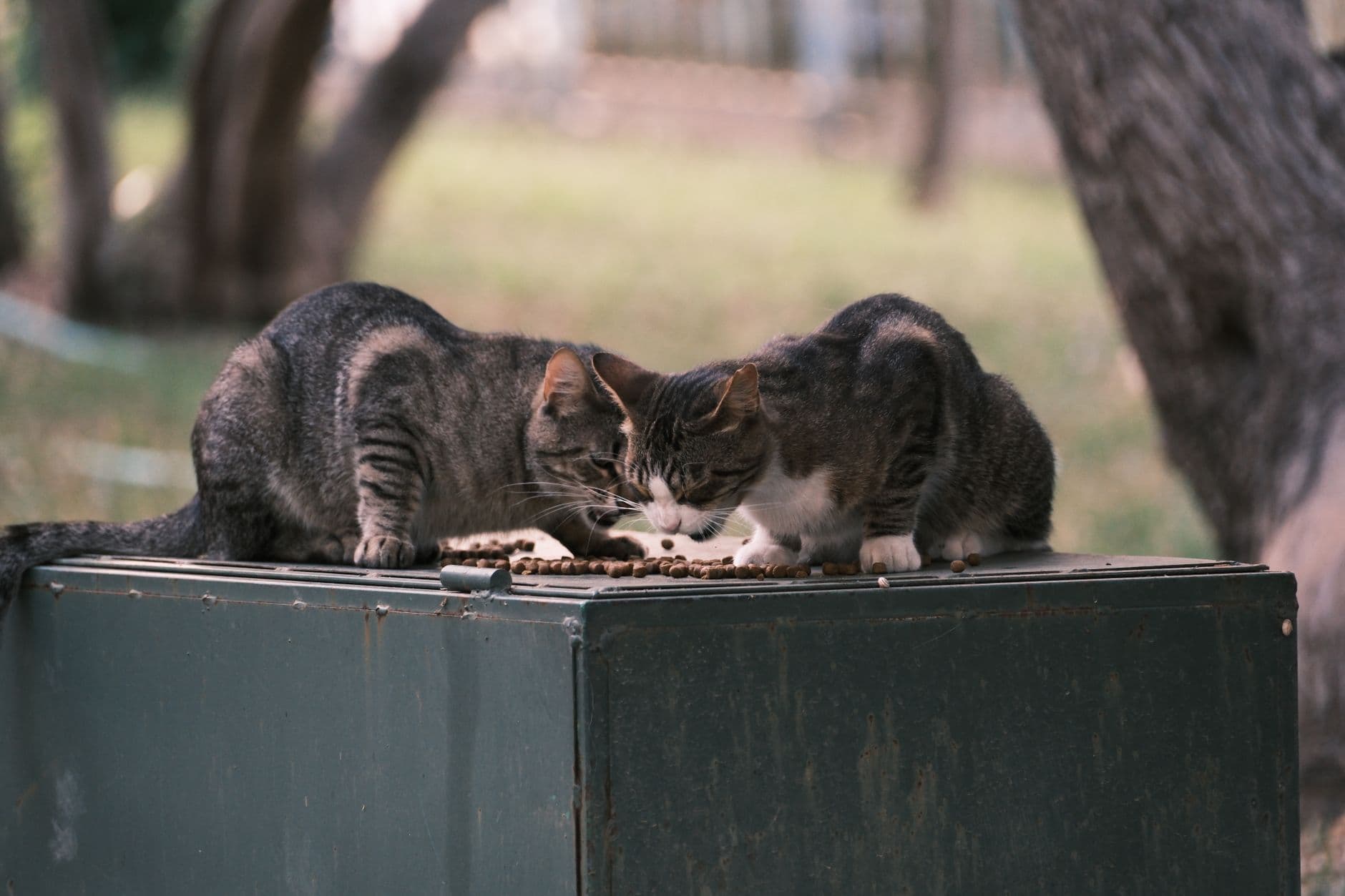
If you're after the short answer: the best dental treats for cats in NZ are the ones with a crunchy, scrubbing texture that does some of the cleaning as your cat chews. Our two picks are Greenies Feline Dental treats — small, crunchy bites designed in the style that earns the VOHC (Veterinary Oral Health Council) dental tick — and Royal Canin Dental, a dental diet kibble shaped to make your cat bite right through each piece so it scrubs the tooth. Both genuinely help. Neither is a cure. Here's how they work, and where their limits are.
Why cats need dental help in the first place
Dental disease is one of the most common health problems vets see in cats — by middle age, a large share of cats have some degree of it (Merck Veterinary Manual). It starts as soft plaque on the teeth, which hardens into brown tartar, which then inflames the gums (gingivitis) and can progress to painful gum disease and tooth loss.
The frustrating part is that cats are masters at hiding pain. A cat with a genuinely sore mouth will often keep eating and act completely normal, right up until things are quite advanced (Cornell Feline Health Center). That's exactly why a daily habit that chips away at plaque — before it ever becomes tartar — is worth building in.
Because cats are so stoic, don't wait for your cat to "tell you" its teeth hurt. Bad breath, drooling, pawing at the mouth, dropping food, chewing on one side, or going off food are all red flags. If you spot any of these, a dental treat is not the answer — book a vet check. Only a vet can assess and treat what's going on under the gumline.
How dental treats and diets actually help
It comes down to texture. A normal cat biscuit shatters the moment a tooth touches it, so it does almost nothing for the teeth. A well-made dental treat or dental kibble is built differently — the piece is larger and has a bit of give, so the tooth sinks into it before it breaks. That brushing-like action wipes some of the soft plaque off the surface of the tooth as your cat chews (New Zealand Veterinary Association).
That's the whole mechanism, and it's worth being clear about what it does and doesn't do. It can slow how quickly plaque builds up on the visible part of the tooth. It does not clean below the gumline (where the serious disease happens), and it does not remove tartar that has already hardened on — once plaque turns to tartar, only a vet can scrape it off. So treats and dental diets are an adjunct: a daily helping hand, best at keeping already-clean teeth cleaner for longer.
The Veterinary Oral Health Council (VOHC) awards a seal to pet dental products that have been independently tested to actually reduce plaque or tartar. It's the closest thing to proof that a treat earns its keep. You won't always see the exact seal on NZ packaging, but products made in that tested style — like the two below — are a far safer bet than a treat that just says "dental" on the front.
Our picks for NZ
Greenies Feline Dental treats are our everyday pick. They're small, crunchy and made in the VOHC-tested style, with a texture designed to scrub as your cat crunches. Most cats treat them like a normal treat, which is half the battle — the best dental treat is the one your cat will actually eat. Give a small daily handful and count it as part of the day's food.
Check price at Pet DirectRoyal Canin Dental is our pick if you'd rather the dental work happen at mealtime. It's a complete dental diet kibble, not a treat — each piece is unusually large and fibrous so your cat has to bite right through it, which scrubs the tooth on the way. Because it's a full food, it replaces your cat's normal kibble rather than adding to it, which also sidesteps the calorie problem. It's a tidy option for a cat already prone to tartar.
Check price at Pet Direct
Dental treats are still food. A daily handful on top of full meals adds up fast, and an overweight cat brings its own health problems. Either swap a little of your cat's normal kibble for the treats, or choose a dental diet like Royal Canin Dental that replaces the meal entirely. Treats should sit at around 10% or less of your cat's daily intake.
Brushing is still the gold standard (and yes, it's possible)
We'll be honest: nothing beats brushing. Daily brushing with a cat-safe pet toothpaste is the only at-home job that actually cleans at the gumline, and it's what your vet will recommend first (Companion Animal New Zealand). Never use human toothpaste — the fluoride and foaming agents aren't safe for cats to swallow.
Brushing a cat is hard, no question. But it's doable if you go slowly: start by letting your cat lick a little pet toothpaste off your finger for a few days, then off a soft finger-brush, then gently rub a tooth or two, building up over a couple of weeks. Some cats come around; some never will. If yours is firmly in the "never" camp, that's exactly where dental treats and diets earn their place — they're the realistic backup. Using both together gives your cat the best shot.
Where treats stop and the vet starts
Here's the line to remember. Dental treats and diets are for prevention — keeping a reasonably healthy mouth ticking along. They can't fix a problem that's already there. If your cat has brown tartar built up, red or bleeding gums, bad breath, or any of the pain signs above, no treat will undo it. That cat needs a vet, almost always for a proper scale-and-polish under anaesthetic, which is the only way to clean below the gumline and remove hardened tartar (Merck Veterinary Manual).
Think of it like your own teeth: brushing and good habits keep things healthy, but once you've got a real problem, you see the dentist. For the full rundown on cat and dog dental care — including how often to get a vet dental check — see our main guide to dog and cat dental care in NZ.
Never forget a flea treatment again
Get our free NZ Flea & Worming Reminder Calendar — a simple month-by-month plan for your cat or dog.
No spam. Unsubscribe anytime. We'll email you the calendar and occasional NZ pet-health tips.
The bottom line
The best dental treats for cats in NZ are the crunchy, scrubbing kind — Greenies Feline Dental for a daily treat, or Royal Canin Dental if you'd rather build it into mealtimes. Both genuinely slow plaque, especially paired with brushing if your cat will allow it. But treat them as a daily top-up, not a cure. Keep an eye out for bad breath, drooling or a cat that's gone quiet about its food — those are the signs that it's time to skip the treat aisle and call your vet.
FAQs
Sources
- Dental disease in cats — overview — Merck Veterinary Manual
- Feline dental health — Cornell Feline Health Center
- Companion animal health advice — Companion Animal New Zealand
- Veterinary care and pet health resources — New Zealand Veterinary Association
Never forget a flea treatment again
Get our free NZ Flea & Worming Reminder Calendar — a simple month-by-month plan for your cat or dog.
No spam. Unsubscribe anytime. We'll email you the calendar and occasional NZ pet-health tips.